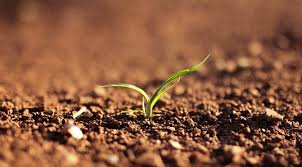
A landmark United Nations (UN) report warns that climate change has caused three-quarters of Earth’s land surface to become permanently dry in the past three decades.
77.6% of Earth’s land surface has become drier in the past three decades than in the previous 30 years, with drylands covering an area larger than India and occupying 40.6% of Earth’s land surface excluding Antarctica.
And the findings, released in a new report by the United Nations Convention to Combat Desertification (UNCCD), warn that if the trend continues, five billion people could be living on dry land by the end of the century – leaving soils depleted, water resources depleted, and vital ecosystems destroyed.
“For the first time, the aridity crisis has been documented with scientific clarity, highlighting the existential threat affecting billions of people worldwide,” Ibrahim Thiaw, UNCCD’s executive secretary, said in a statement.
“Droughts end. However, when the climate of an area becomes dry, the ability to return to previous conditions is lost. The arid climates affecting vast lands around the world will no longer be what they were before and this change is redefining life on Earth.”
Climate change is causing temperatures to rise around the world, water is evaporating more easily from its surfaces, and the atmosphere’s ability to absorb it is steadily increasing. This is pushing much of the planet into increasingly arid conditions – turning once lush forests into permanently dry plains, destroying grasslands and removing moisture essential for life and agriculture.
This issue, along with destructive land use and mismanagement of water resources, means that nearly three billion people and more than half of global food production are facing “unprecedented stress” on their water systems, according to a recent study.
Yet despite growing concern among scientists, documenting the extent of the planet’s drying due to climate change has been a challenge, mainly, the report claims, because of the complexity of interconnected factors, conflicting results and the blurring effect of scientific caution.
To overcome this impasse, the authors behind the new report used advanced climate models, standardized methodologies and a comprehensive review of existing literature and data to get a clear picture of the increasing drying trend.
And their findings are clear: aridity is now affecting 40% of the world’s agricultural land and 2.3 billion people, fueling wildfires, agricultural collapse and fueling mass migration. Particularly badly affected regions include almost all of Europe, the western United States, Brazil, East Asia and central Africa.
Yet the report’s authors say that if action is taken, the future need not look so bleak. The comprehensive roadmap they offer for tackling the crisis — in addition to drastically reducing carbon emissions to halt the trend — includes better monitoring of aridity, better use of land and water, and fostering resilience and cooperation within and between communities around the world.
“Without collective efforts, billions of people will face a future filled with hunger, displacement, and economic decline,” UNCCD chief scientist Baron Orr said in the statement. “Yet, by embracing innovative solutions and fostering global solidarity, humanity can rise to meet this challenge. The question is not whether we have the tools to respond — the question is whether we have the will to act.”